


 |
| Hồ Đình Thám, resident adviser to the Electricity Authority of Vietnam under the Ministry of Industry and Trade. —VNS Photo |
By Mai Hương
As geopolitical tensions rattle global energy markets and the transition to clean energy accelerates alongside rapid technological change, Việt Nam is stepping up reforms to modernise its electricity sector. In an interview with Việt Nam News, Hồ Đình Thám, resident adviser to the Electricity Authority of Vietnam under the Ministry of Industry and Trade, discusses global energy trends, the country’s progress in building a competitive power market and the implications for energy security.
Could you share some major trends shaping the global and Vietnamese energy markets recently, and their implications for the power sector?
While it is difficult to point to a single defining event, two major trends are currently reshaping the global energy sector, particularly electricity systems and power markets.
The first is the global shift towards cleaner energy and lower carbon emissions. According to the International Energy Agency, coal’s share in global electricity generation had fallen to about 33 per cent by mid-2025, the lowest level in nearly a century. Meanwhile, wind and solar are expanding rapidly, accounting for around 17 per cent of global electricity, with shares reaching nearly 30 per cent in the European Union and about 50 per cent in Australia.
This transition is reshaping the structure of power generation and driving policy changes in electricity market design and system operation. Because renewable energy sources depend on weather conditions and vary by season and time of day, power systems must adopt new solutions to maintain stability as their share increases.
Energy storage systems such as batteries and pumped-storage hydropower will help balance these fluctuations. At the same time, stable generation sources remain necessary, with gas-fired power seen as a flexible transitional option and nuclear power gaining renewed attention for its stable output and near-zero carbon emissions.
The second trend is the growing use of digital technologies and artificial intelligence in power system operations and electricity markets, helping improve grid management, optimise operations and forecast demand and renewable output. Việt Nam is beginning to explore these technologies, which could in the future help households better manage electricity use through rooftop solar, battery storage and even sell excess power back to the grid.
Another aspect is the rapid growth of electricity demand from data centres as AI systems require enormous computing power. These loads can also provide flexibility in certain cases by adjusting consumption levels to support more efficient grid operation.
From an international perspective, where does Việt Nam currently stand in its roadmap for building a competitive energy market?
Việt Nam’s policy direction is to develop the energy sector, particularly the electricity market, based on market principles. Political and legal frameworks have already been established through Politburo Resolution No. 70 and the Electricity Law. The key challenge now is effective implementation.
International experience shows that electricity markets usually develop in three stages: competitive generation, competitive wholesale markets and competitive retail markets. Việt Nam has followed this roadmap since 2006.
In the competitive generation stage, power plants bid to supply electricity and lower-cost sources are dispatched first. In the wholesale stage, bulk buyers such as electricity corporations purchase power from the market or through contracts before selling it to users. The next stage is a competitive retail market, where consumers can choose their electricity supplier while transmission and distribution networks remain shared infrastructure as in telecommunications.
Việt Nam has adopted a gradual approach to ensure system stability and avoid major price shocks. The competitive generation market has been operating since 2012, while the wholesale electricity market was launched in 2019. However, Vietnam Electricity (EVN) still acts as the main buyer of electricity, meaning competition remains limited.
Compared with markets in the US, Australia and Europe – where electricity markets were introduced in the 1990s and took about 10–15 years to mature – Việt Nam is still transitioning from competitive generation to a wholesale market, while Singapore and the Philippines have already introduced retail competition.
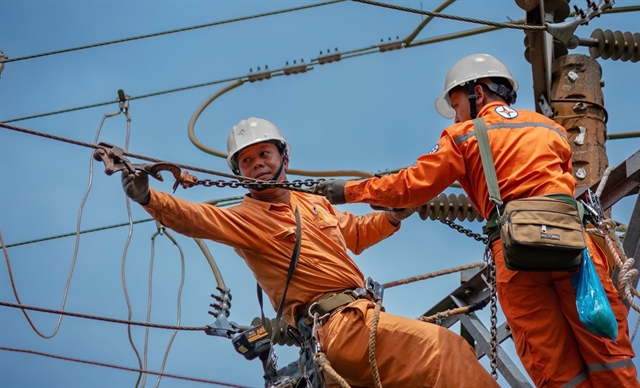 |
| The Central Power Corporation (EVNCPC) steps up routine inspections of power lines. —VNA/VNS Photo |
What is the roadmap for a competitive retail electricity market in Việt Nam and how could it affect electricity prices?
The retail electricity market will be introduced gradually. One important step is the Direct Power Purchase Agreement (DPPA) mechanism, which allows large consumers to buy electricity directly from producers.
The Government has already issued regulations on DPPA and several companies have begun signing direct power purchase agreements. However, some obstacles remain and authorities are reviewing revisions to Decree 57 to remove bottlenecks and create a more favourable framework for businesses to contract directly with each other.
Electricity prices are still largely based on production and supply costs, which depend on factors such as fuel prices, exchange rates, weather conditions, changes in the power mix and investment in transmission and distribution infrastructure.
Introducing market mechanisms does not mean electricity prices will fluctuate unpredictably. Electricity providers such as EVN still need to establish stable tariff structures for consumers and apply risk-management tools to mitigate input volatility.
A key advantage of a competitive market is greater transparency. Prices and costs are reflected through market signals, providing clearer data for both regulators and businesses. When costs rise or fall, adjustments can be justified with market-based evidence, making policy decisions and tariff changes more transparent.
As Việt Nam expands clean energy and develops a competitive electricity market, how should pricing reflect real costs while ensuring social welfare and economic competitiveness?
Electricity is a special commodity because it directly affects economic activity and daily life, which is why electricity pricing is always a sensitive issue.
However, if Việt Nam wants to build a market-based electricity sector, prices should in principle be formed through market mechanisms like other goods in the economy.
The key is to separate two issues. First is the formation of electricity prices through the market so that they accurately reflect production costs, encourage efficiency through competition and attract investment into the power sector. The second is social support policies to protect vulnerable groups such as low-income households or people living in remote areas.
Electricity markets should also include multiple buyers and sellers, transparent bidding and risk-management tools, and once a certain level of competition is achieved, they will improve efficiency and help reduce costs over time.
During the energy transition, some renewables may initially be more costly, but electricity markets can encourage investment in new technologies, while economic competitiveness depends not only on low energy prices but also on technology, efficiency and innovation.
In that sense, prices that reflect real costs can sometimes be better than keeping them artificially low, as they push businesses towards more efficient and cleaner production while maintaining competitiveness.
Amid global energy volatility, particularly tensions in the Middle East, how important is developing the domestic energy market for Việt Nam’s energy security?
Global energy market volatility, especially geopolitical risks in the Middle East, a region that supplies a large share of the world’s oil, has made energy security increasingly important for Việt Nam.
In the past, Việt Nam was a net exporter of some energy products, particularly crude oil. However, rapid industrialisation and growing energy demand mean the country is now becoming more dependent on fuel imports.
Việt Nam currently imports significant volumes of coal, crude oil, petroleum products and liquefied natural gas (LNG) to meet domestic demand. Energy consumption has risen quickly, while domestic gas reserves are declining and policies limit further expansion of coal-fired power.
Crude oil imports are mainly used by refineries such as Nghi Sơn and Dung Quất, with supply sourced from the Middle East and other regions. Refined petroleum products like gasoline and diesel are still imported to supplement domestic refining capacity. Since 2023, Việt Nam has also begun importing LNG to support future gas-fired power projects.
As geopolitical tensions push global oil and gas prices higher, developing a competitive domestic energy market could improve efficiency, encourage investment in wind, solar and storage and reduce reliance on imports.
A competitive electricity market will also be linked with LNG power projects, which can provide flexible capacity if developed carefully to avoid overcapacity, which could lead to higher generation costs or stranded assets in the long term. More broadly, a transparent and efficient energy market can attract private investment, promote innovation and strengthen Việt Nam’s long-term energy security. — VNS
Nguồn: https://vietnamnews.vn/economy/1778199/building-a-competitive-power-market-to-secure-viet-nam-s-energy-future.html